
In the tech space it’s kind of surreal how one day you can have a normal day, and the next day it’s all chaos. Think about what happened when ChatGPT released in 2022 (no way, it feels like 2 years ago). But here’s the thing, being someone from Botswana, a lot of this tech disruption only trickles down after a few years and it’s really a bummer.
Here’s an example, the standard fixed home internet you get is around 4-10 Mbps and you would end up coughing up about 500 BWP (50AUD) for 4Mbps which is frankly insane. Oh and did I mention that my area didn’t have proper fibre coverage so we ended up using these Ubiquiti Litebeam’s to get internet (pictured here).
Anyway so that’s what we had to live with since the 2000s and we’ve reluctantly gotten used to it with everyone hating their ISP… but isn’t that a universal thing? This all changed in 2024 when Botswana finally gave Starlink a licence to operate, with them starting in 2025.
This, of course led to almost every ISP to panic because in this case Starlink was an upgrade to everything. Since a lot of people like me get wireless internet instead of fibre, the latency is pretty variable from 20ms to 60ms (depending on weather) with limited speeds. However Starlink gave you a stable 25ms link with a 200Mbps+ speed, dare I say it’s effectively a fibre link from the sky.
I eventually switched over at the end of 2025 when I visited home and it was one of the easiest setup experiences I’ve had:
- unbox
- activate
- point at sky
- you’re done
I didn’t even install it properly, I just had it facing my dad’s car and I got 300Mbps with around 30ms which honestly struck me because what do you mean technology is this advanced I can just get it wherever I am?
At the end of me playing around with it I eventually did get it professionally installed and integrated with my HomeLab and was having a pretty good experience except for one realisation:
CUBIC hates Starlink
CUBIC is a protocol used in TCP as a congestion avoidance system, and I’m not confident enough to talk much about it but the gist of it is that uses packet loss as a factor. But here’s the thing about Starlink, remember I mentioned that starlink is basically a fibre link from the sky, well I sort of lied. It is stable, but has a lot of micro stutters (pictured below)
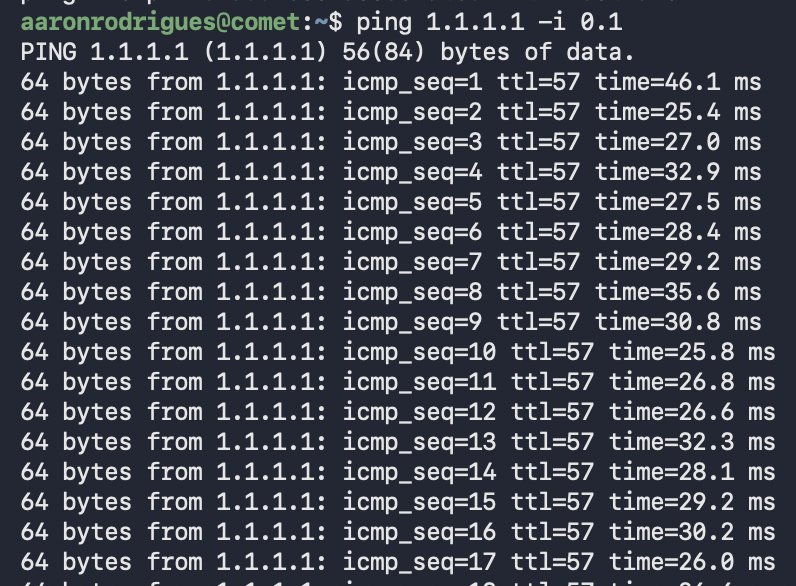
This effectively causes the CUBIC protocol to go nuts and throttle the download speed by a crazy amount, going from 150Mbps all the way down to 10Mbps. My geographic location doesn’t help either as it takes ~200ms to connect to European servers, where a lot of our downloads come from.
BBR saves the day
After scouring the internet trying to understand this behaviour and finally reaching this forum, this is something you can fix, as long as you download from a server that uses the BBR congestion algorithm like Cloudflare.
Quick detour, BBR was developed by Google in 2016 and it uses round trip time and maximum bandwidth to understand if a line is congested which is objectively better for our use case e.g. LEO internet.
However, other than Cloudflare, not a lot of web services use BBR as their algorithm so I effectively had to tunnel my traffic into a VPN that uses this congestion protocol such as Cloudflare WARP or Proton VPN with its VPN accelerator enabled. Once I enabled that, my speeds jumped back up to 100-120Mbps. It’s still not 300Mbps, but its good enough.
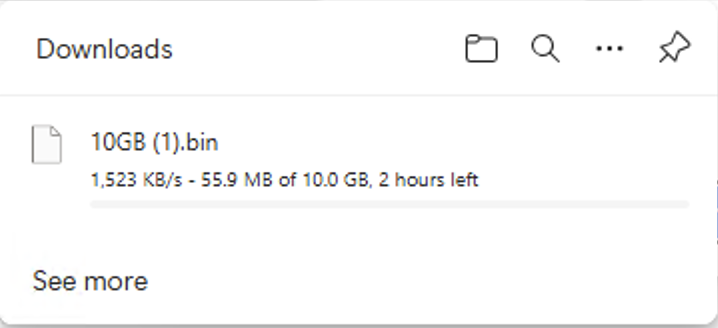
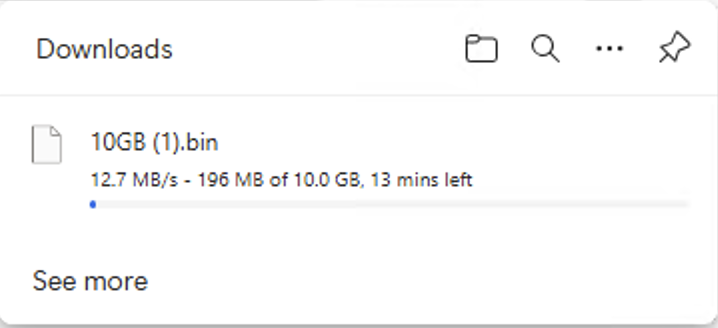
You can see how stark the differences are, almost an 8x speed difference. Of course you have to deal with the additional latency and depends on the load of the VPN server however the speed is something that really matters to you then the added few milliseconds of latency shouldn’t really matter.
But anyway, thats LEO internet and the additional complications. Until more providers adopt a better congestion algorithm, ahem ahem BBR, you’ll have to either adopt a janky solution like this or switch over to fibre.
With that said, this ended up teaching me something new (hopefully for you too) and gave me an excuse to spend hours researching on something so I’d say it was all worth it.
– aaron